
RAG development: answers grounded in your documents, with sources
We build retrieval-augmented systems that answer from your own documents and show where each answer came from. In production for tax research and for a government business assistant.
Connecting a model to a vector database takes an afternoon. Getting answers that a professional will sign their name under takes much longer, and almost all of that time goes into the parts nobody demos: how documents are parsed and split, how the right passages are found, and how you prove the answer follows from the source.
We have built that pipeline for US tax professionals, where every answer cites the primary authority it relies on, and for a bilingual assistant that answers small-business questions from official documents.
Scope
What we build
Document ingestion
Parsing for PDFs, scans, forms and handwritten pages, turned into structured data the system can search. On TaxFigure this covers W-2s, 1099s, K-1s, brokerage statements and prior-year returns.
Retrieval and reranking
Vector search combined with a reranking step, so the passages given to the model are the relevant ones. We have shipped this on pgvector and on Pinecone, with Cohere Rerank.
Answers with citations
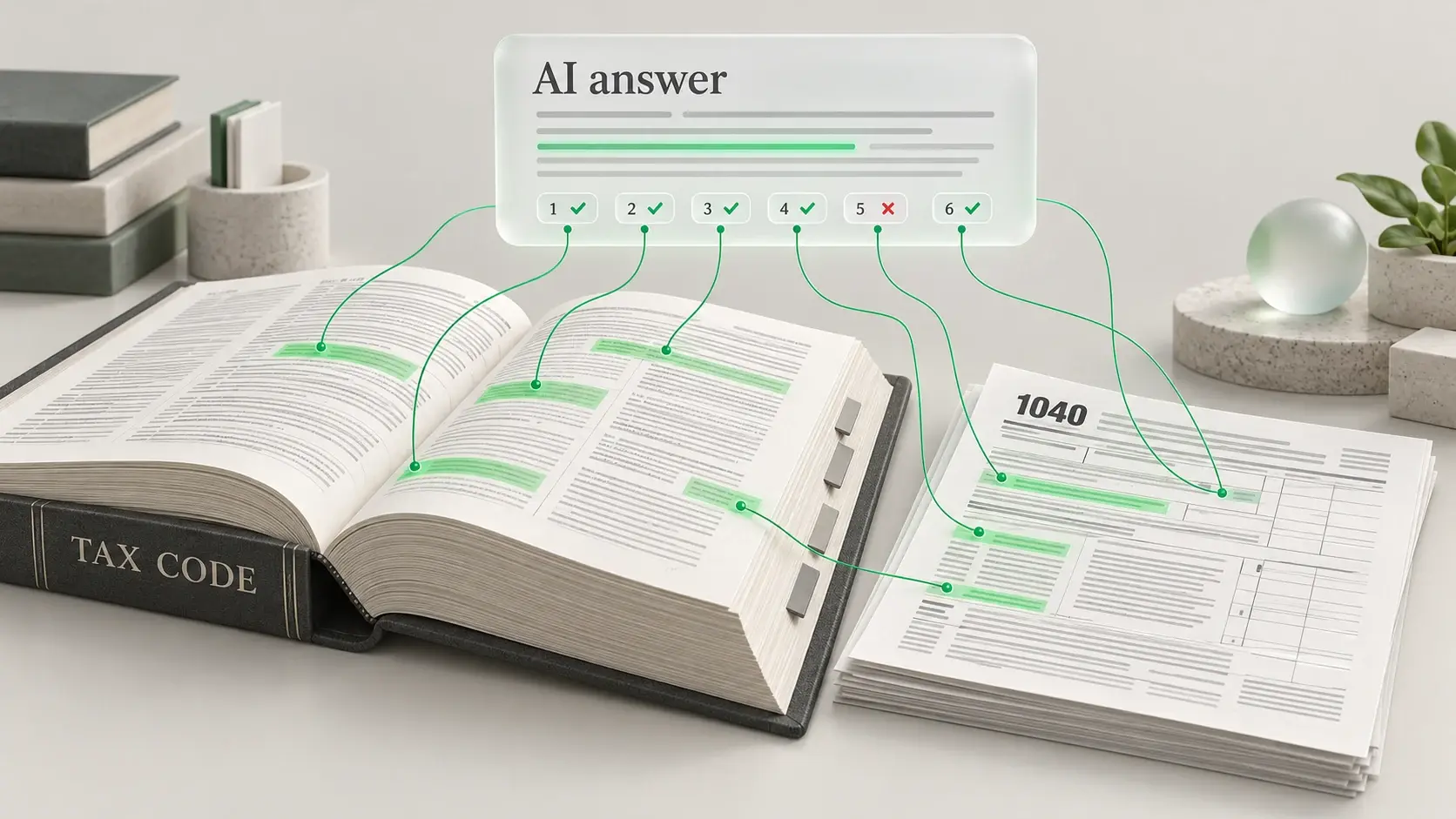
Each answer points to the passages it relies on, so a reader can check it. Queries and sources are logged for an audit trail.
Fine-tuned models where they help
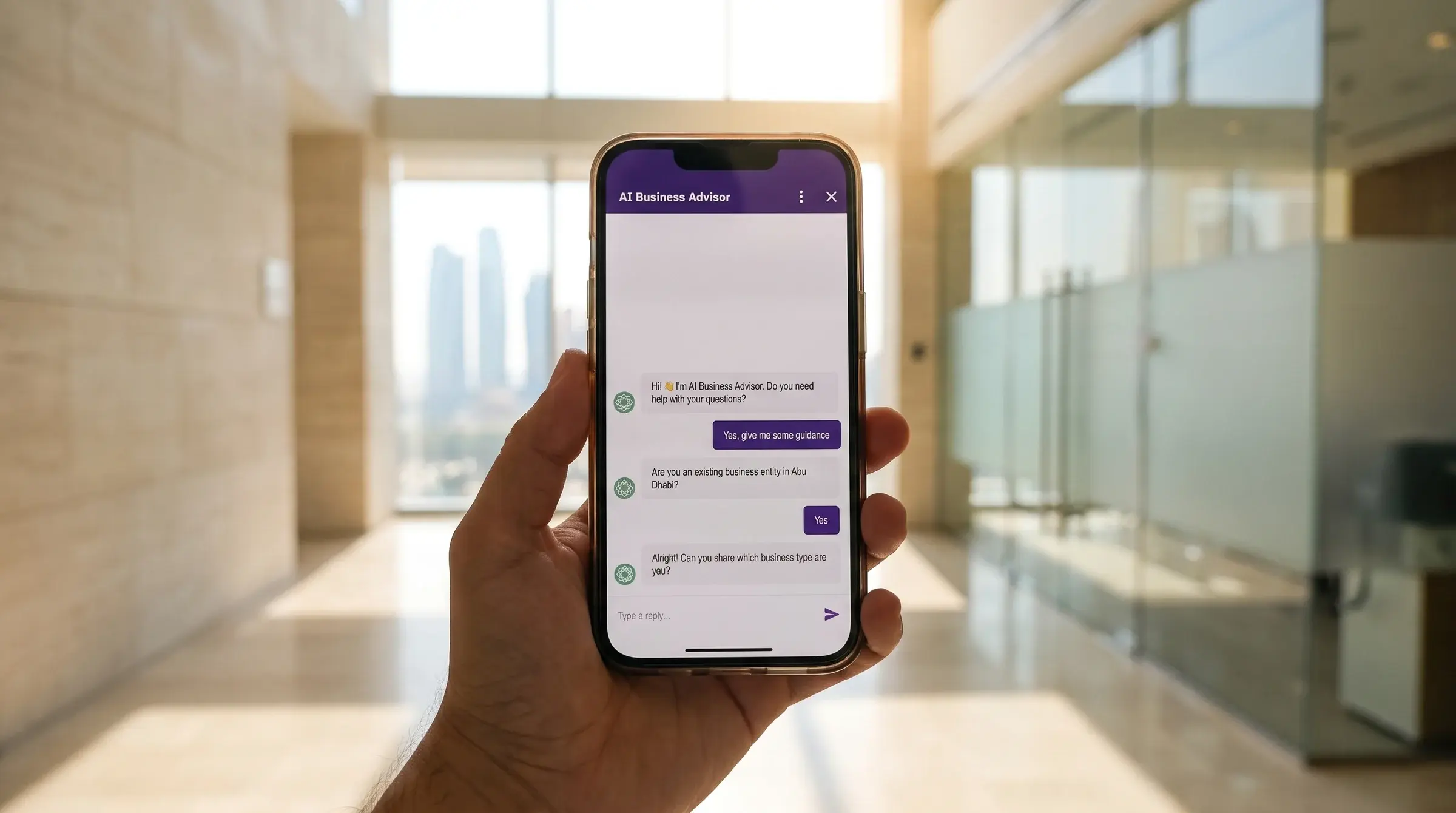
When a domain has its own vocabulary, we fine-tune a model and keep retrieval for the facts. The Abu Dhabi SME Hub assistant runs a fine-tuned Mistral model trained on 11,000 question-and-answer pairs.
Privacy controls
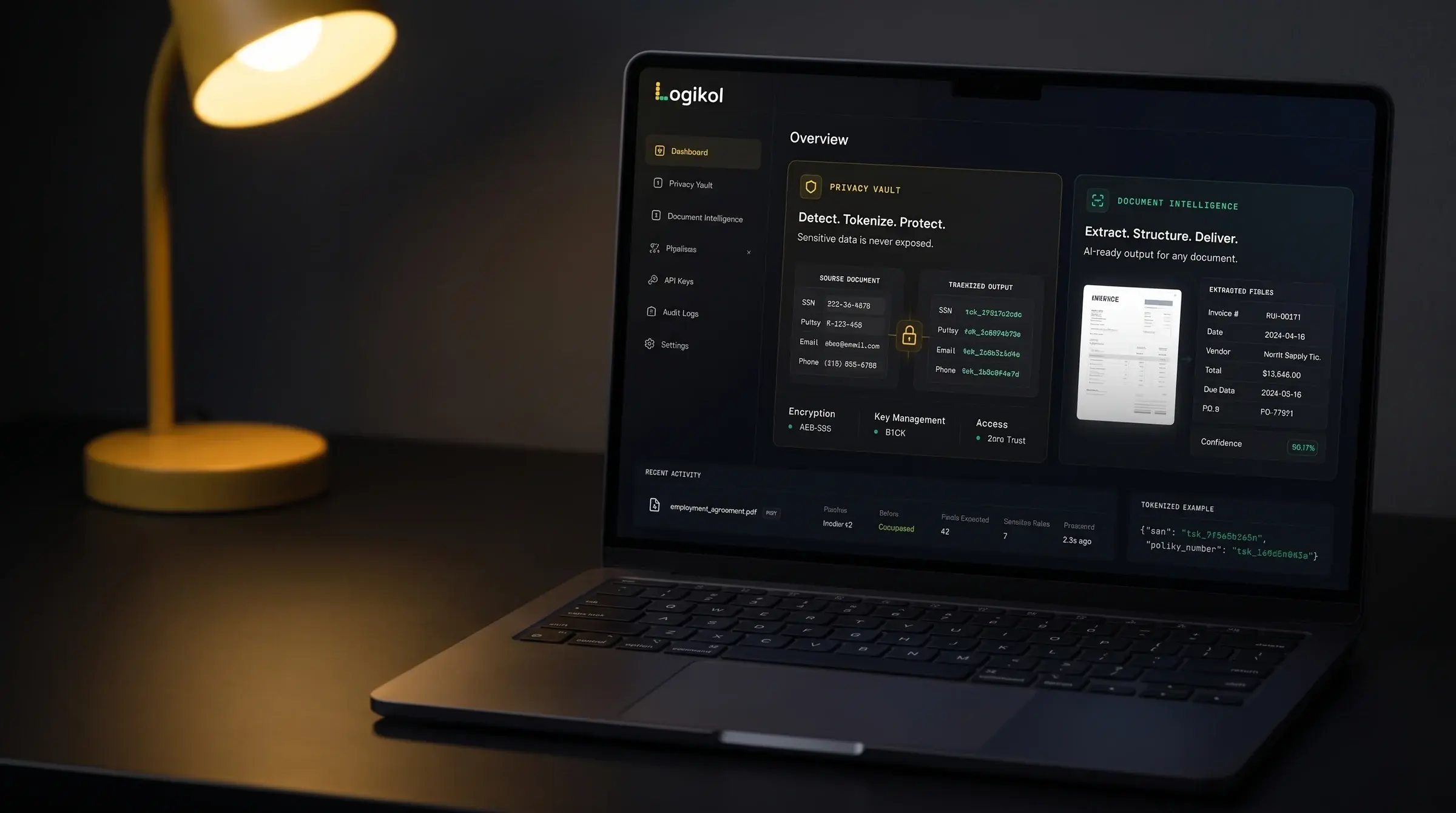
Personal data can be detected and tokenized before a prompt leaves your system. We built this as a product for Logikol.
Evaluation
A test set drawn from your real questions, run on every change, so you can see whether retrieval or answer quality moved.
Process
How we work
- 01
Look at the documents first
We read a sample of what you actually have: formats, quality, language, how often it changes. That decides the ingestion design.
- 02
Measure retrieval on its own
Before tuning prompts, we check whether the right passages are being found. Most wrong answers start there.
- 03
Decide what happens when the answer is not in the documents
A grounded system has to be able to say it does not know. We agree that behavior with you and test it.
- 04
Ship with the logs on
Every query, source and answer is recorded from the first day in production, so problems can be traced and the test set keeps growing.
Proof
RAG systems we have shipped

FAQ
Questions we get about this.
- Which vector database do you use?
- We have shipped on pgvector and on Pinecone. If you already run PostgreSQL, pgvector is often enough. The choice depends on your data volume and what you already operate.
- Do we need to fine-tune a model?
- Usually not at the start. Retrieval handles facts, and a fine-tuned model helps mainly with domain language and tone. We have done both together when the domain called for it.
- How do you stop the system from making things up?
- By grounding answers in retrieved passages, showing the citations, deciding in advance what the system says when the documents do not contain the answer, and testing all of that on real questions before launch.
- Can it run on documents that contain personal data?
- Yes. Personal data can be tokenized before it reaches a model, and we deploy to your own production environment.
- Does it work in languages other than English?
- Yes. The Abu Dhabi SME Hub assistant works in English and Arabic, and our team works in English, French and Arabic.

Other services
Tell us where the project stands.
We reply to every inquiry within 24 hours. Every engagement starts with a conversation.
Start a conversation