Neither route is the safe one
Your support agent needs five tool actions per ticket. Before choosing Agentforce, Copilot Studio, the OpenAI Agents API or custom code, we would price those five actions on each option and check where the data is processed. This article does both.
The usual advice is to buy when the problem is common and build when it is specific. The evidence from the last eighteen months is less tidy than that.
MIT's NANDA initiative reported in July 2025 that, in its sample, external partnerships with "learning-capable, customized tools" reached deployment about 67% of the time, against about 33% for internal builds. The report adds its own caveat: the difference "may reflect organizational capabilities rather than implementation approach alone". It rests on 52 interviews and 153 survey responses, all self-reported. Menlo Ventures found the market moving the same way: in its 2025 survey, "76% of enterprise AI solutions are purchased rather than built internally", up from 53% a year earlier.
Then, on September 29, 2026, Gartner predicted that "by 2028, 70% of enterprises will abandon agentic AI built by vendor forward-deployed engineering". Buying a platform and letting the vendor's engineers assemble your agent on it is not a guarantee either.
We build custom agents for a living, so weigh what follows with that in mind. We have tried to make it useful even if you end up buying. In practice the choice is rarely build or buy for the whole thing. It is which layers you rent and which you own.
Four options and how each one bills
All figures below come from vendor pages we opened on November 20, 2026. List prices change, so check them again before you sign.
| Option | What you get | How it is billed |
|---|---|---|
| Salesforce Agentforce | Agents inside Salesforce, built with low-code tools on your CRM data | Per conversation, or Flex Credits per action, or per-user add-ons |
| Microsoft Copilot Studio | Agents inside Microsoft 365 and Power Platform | Copilot Credits per answer, action or 1,000 tokens |
| OpenAI Agents API | A managed agent harness behind an API, in public beta | Model tokens plus container and tool fees |
| Custom agent | Your own orchestration, on an SDK or your own code, on your infrastructure | Model tokens, your hosting and engineering time |
Agentforce. The pricing page lists $2 per conversation for customer-facing agents. The alternative is Flex Credits at $500 per 100,000 credits, where "Agentforce actions are 20 Flex Credits", which works out to $0.10 per action. Per-user add-ons are also available for Sales, Service and Field Service; confirm the current price for the SKU you need. Two lines from the same page belong in your model: "Unused Flex Credits do not roll over into subsequent subscription terms", and Salesforce's own pricing example "does not include other costs like Data 360 credits or other consumption services".
Copilot Studio. Microsoft sells "Copilot Credit capacity packs of 25,000 Copilot Credits each, priced at $200.00/pack/month", or $0.008 per credit. The rates table charges 1 credit for a classic answer, 2 for a generative answer, 5 for an agent action and 10 for tenant graph grounding. Reasoning models add token charges on top of those feature charges, "at 10 Copilot Credits per 1,000 tokens". Microsoft's own example on that page, one message on Claude Opus 4.7, incurs 141 credits in token charges alone, about $1.13 at the pack rate, before feature charges. Its scenario with less of the prompt cached incurs 461 token credits. Credits do not carry over to the next month, and "enforcement is triggered when a tenant reaches 125% of their prepaid capacity". Any Copilot Studio estimate also has to say which harness it assumes, because the product now has three, each billed differently.
OpenAI Agents API. OpenAI's documentation describes it as access "to the Codex harness through an OpenAI-managed API". It has been in public beta since September 10, 2026, according to the API changelog. "Model usage is billed at the selected model's API rates", and hosted sandboxes "use standard container rates", which the pricing page lists from $0.03 per 20-minute session for a 1 GB container. Web search costs $10 per 1,000 calls plus tokens. OpenAI adds no fee per call to remote MCP servers, though the tokens those calls use are still billed.
Custom. You run the loop yourself, with a vendor SDK such as OpenAI's Agents SDK or Anthropic's Claude Agent SDK, or with your own orchestration code. You pay model tokens at list price, your own hosting, and the engineering. We worked through that arithmetic in What an AI agent really costs to build and run: for a support agent making six model calls per ticket, the token line came to between about $0.04 and $0.13 per ticket depending on caching and routing, before hosting, evals and the people who maintain it.
The unit you are billed in decides the bill
Those four price lists are not comparable until you fix the workload. Take the same support ticket, with five tool actions. Under Agentforce Flex Credits that is 100 credits, or $0.50. Under the per-conversation model it is $2. In Copilot Studio's standard harness, five agent actions and two generative answers are 29 credits, about $0.23 in feature charges. Select a reasoning model and token charges are added to that, which in Microsoft's example is more than a dollar for a single message.
None of these numbers is a recommendation. They show that per-action pricing rewards short, bounded tasks and punishes agents that explore. If your workflow needs fifteen tool calls and a retry loop, model it at the vendor's unit before the demo, not after the first invoice. Platform prices also buy things the custom column has to build: identity, permissions tied to your existing roles, an admin console, audit logs. If your users and your data already sit in Salesforce or Microsoft 365, that is real engineering you skip.
What stays portable, and what does not
Your tools can be. All three platforms now speak MCP. Salesforce's help center states that its MCP client "reached GA at TDX (April 2026)". Microsoft's documentation says "Copilot Studio currently supports MCP tools and resources". OpenAI's Responses API and Agents API connect to remote MCP servers. An MCP server you build for your ERP can therefore serve an Agentforce agent today and a custom agent next year. That is the layer we would own first, and we explain why in our guide to the current MCP spec.
Your agent definition is not. Copilot Studio exports agents as Power Platform solutions, to move them between environments, and Microsoft's export documentation warns that "not all agent components and properties are included". Topics, flows and prompt configuration written for one platform do not run on another.
Your state may not be. The Agents API "retains session state so you can continue work across turns". That is convenient, and it means the conversation history lives with the vendor.
The product itself may not last. OpenAI's deprecations page shows the Assistants API shut down on August 26, 2026, and Agent Builder, announced as deprecated on June 3, shutting down on November 30, 2026. A team that adopted both has had two migrations to plan in a year. A custom agent has its own version of this problem, because hosted models get retired too. You control how the migration is done, but the vendor's shutdown dates still constrain when.
Data residency: read the model table
For regulated buyers in the EU, the platform's region claim is only half the answer. The other half is where the model runs.
Microsoft states that Copilot Studio "offers EU Data Boundary compliance", but its model selection page marks the Claude models as cross-geo for Europe, and "models marked as cross-geo might process data outside of your region". Salesforce's model documentation describes a US fallback for Salesforce-managed models, which "eventually re-route to a US region to avoid returning an error". An in-region-only setting disables that behavior for some models, so verify support and routing for the exact model your Agentforce agent uses. The OpenAI Agents API currently supports US data residency only and is not eligible for zero data retention: its overview notes that a self-hosted sandbox "does not make the Agents API ZDR-eligible". OpenAI's EU data residency exists for eligible models on other endpoints, with "a 10% uplift for models released on or after March 5, 2026", and does not extend to the Agents API.
None of this is hidden. It is on pages a compliance officer will not read unless engineering sends them the link.
How we would decide
Five questions settle most cases.
- Where does the work happen? If the agent's whole job is inside Salesforce records or Microsoft 365 documents, start with that platform's agent. If it spans your ERP, a document store and two internal APIs, the platform becomes one tool among several.
- How many steps does one task take? Count tool calls on real cases. Multiply by the vendor's unit price and by your volume. Compare with tokens plus hosting.
- Is the logic your advantage? A password-reset agent is a commodity. An agent that applies your underwriting rules is not, and you will want its prompts, evals and traces in your own repository.
- What must be proven to a regulator or a client? Check that the platform's logs give you the evidence you need, in a form you can export.
- What would leaving cost? List what you would have to rebuild: connectors, agent logic, conversation history, evals. If the list is short, lock-in is cheap and buying is fine.
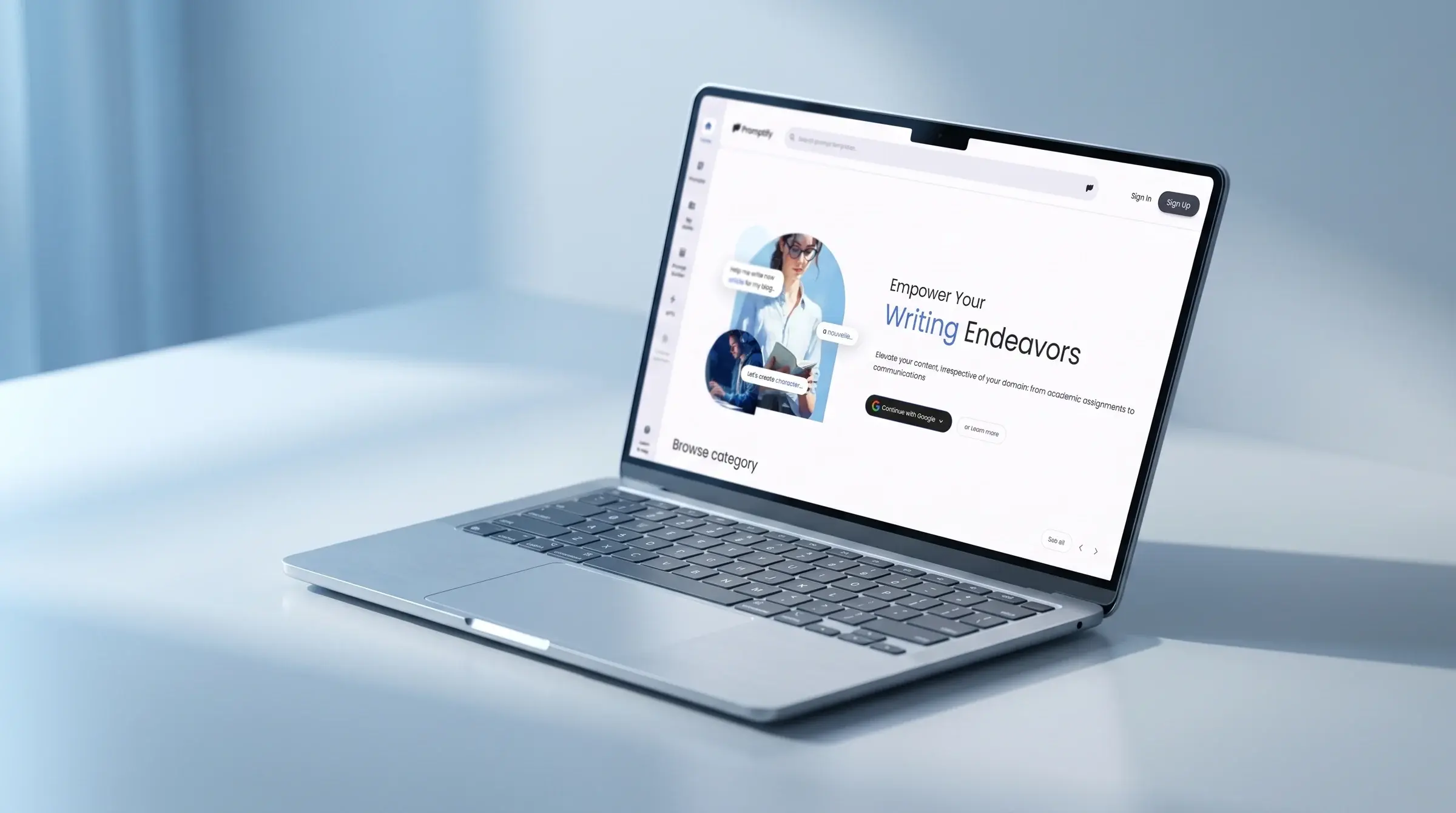
A pattern we often recommend is mixed: buy the platform agent for work that lives inside the platform, build the MCP servers for your own systems once, and write custom agents only for workflows where the logic is yours. On Promptify, the execution backend we built runs templates on OpenAI, Anthropic, Cohere, Replicate or Hugging Face models, so adding a provider is a backend change, not a product change. Keeping that option open is what the custom layer buys you.
If you are weighing a platform quote against a custom build for a specific workflow, send us the workflow and we will tell you which side we would pick, including when the answer is to buy.
Sources
- The GenAI Divide: State of AI in Business 2025, MIT NANDA, July 2025 (copy of the report hosted on SlideShare)
- 2025: The State of Generative AI in the Enterprise, Menlo Ventures, December 9, 2025
- Gartner Predicts 70% of Enterprises Will Abandon Agentic AI Built by Vendor Forward-Deployed Engineering by 2028, Gartner, September 29, 2026
- Agentforce pricing, Salesforce, accessed November 20, 2026
- Agentforce architecture guidance, including MCP status, Salesforce Help, September 1, 2026
- Large language model support, Salesforce Help, accessed November 20, 2026
- Copilot Studio pricing, Microsoft, accessed November 20, 2026
- Copilot Credits and billing rates, Microsoft Learn, accessed November 20, 2026
- Harnesses in Copilot Studio, Microsoft Learn, accessed November 27, 2026
- Standard harness licensing, Microsoft Learn, accessed November 27, 2026
- Extend your agent with Model Context Protocol, Microsoft Learn, accessed November 20, 2026
- Geographic data residency in Copilot Studio, Microsoft Learn, accessed November 20, 2026
- Select a model for your agent, Microsoft Learn, November 19, 2026
- Export and import agents using solutions, Microsoft Learn, accessed November 20, 2026
- Agents API overview, OpenAI developer documentation, accessed November 20, 2026
- Pricing, Deprecations and Data residency, OpenAI developer documentation, accessed November 20, 2026
- MCP and connectors, OpenAI developer documentation, accessed November 27, 2026
- API changelog, OpenAI developer documentation, accessed November 20, 2026